
The most recent Autumn Budget announcement on 26th November 2025 confirmed that alcohol duty is set to rise in line with the Retail Price Index (RPI) at 3.66% from 1st February 2026.
According to the WSTA (Wine and Spirit Trade Association), this means that duty (including VAT) will go up by 11p on a bottle of Prosecco, 13p on a bottle of red wine and 38p for a bottle of gin.
Duty changes in line with ABV and RPI
From 1st August 2023, new legislation for duty on alcohol products came into place. While some products were previously measured on volume only – such as still wine and cider – all alcohol products are now measured by alcohol volume (or ABV). In simple terms, the higher the ABV, the higher the new duty rate will be.
What does this mean for wine?
When the wine easement ended in February 2025, the new system for measuring duty saw up to 30 different payable amounts according to the strength of the wine, declared at 0.5% increments. For example, a bottle of wine at 14.5% ABV saw its duty increase from £2.67 a bottle to £3.21.
The further abolishment of separate duty rates for sparkling and still wine meant that a bottle of Champagne or sparkling wine had its duty reduced by £0.02, bringing it down to £2.65 and in line with a 12% ABV still wine.
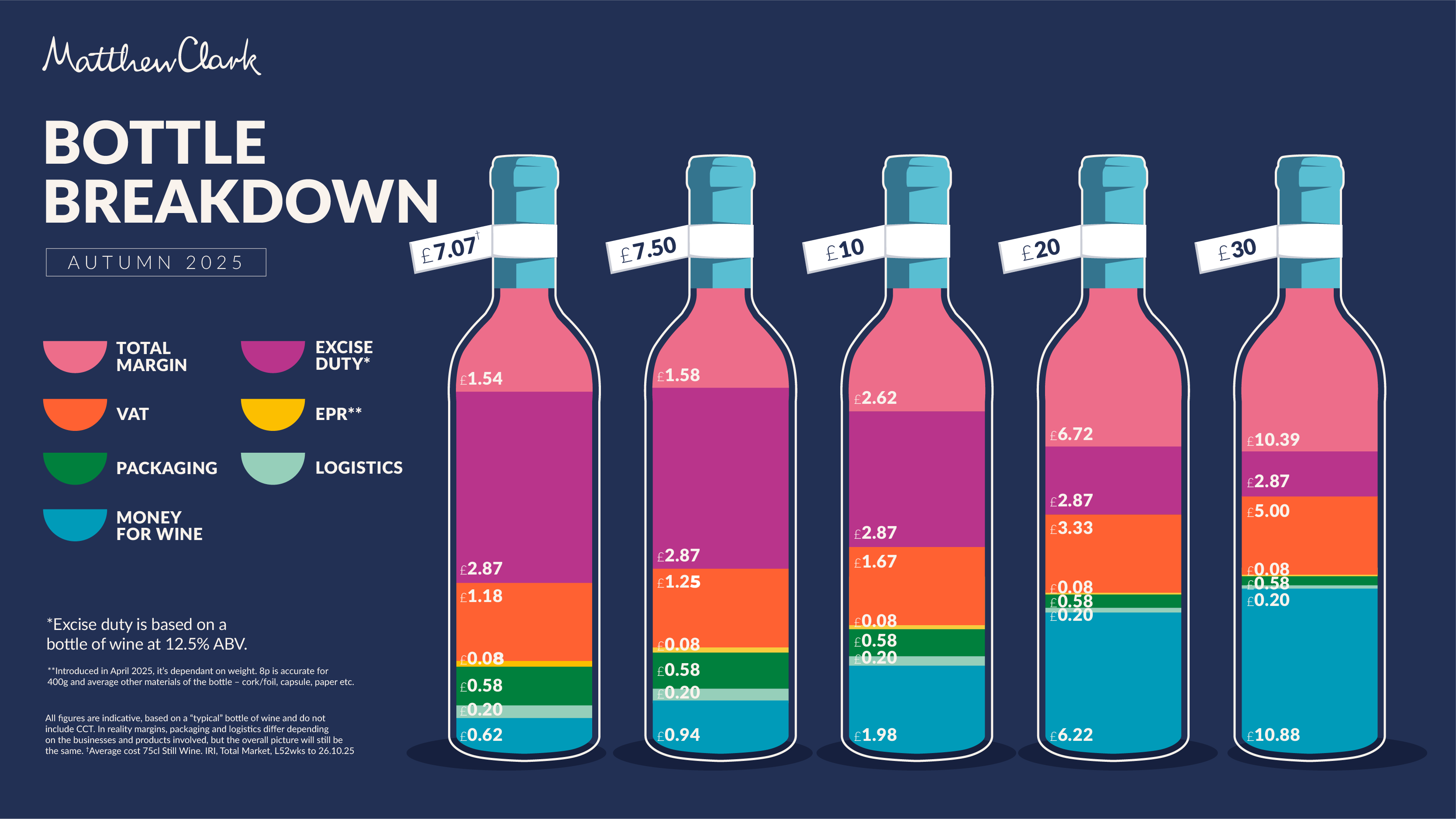
When the duty rises yet again on 1st February 2026, all alcohol products will see an increase. Considering duty, alongside packaging, logistics, VAT, the new EPR and total margins, you get considerably better quality for your money with premium products.
For example, in two bottles of wine with an ABV of 12.5% the duty will cost £2.87. However, in a bottle that costs £20, £6.22 pays for the actual wine itself, compared to a bottle with the same ABV costing £7.07 (the average cost of still wine across the UK), in which only 62p pays for the actual wine.
See our bottle breakdown below, which shows how money for actual wine increases exponentially as the price increases.
What does this mean for spirits?
As duty on all alcohol products is set to rise from February 2026, so is duty on non-draught spirit products.
Not including VAT, duty on a 40% ABV 70cl bottle will go up 34p to £9.52 and a 38.5% ABV 70cl bottle by 32p to £9.16.
What does this mean for draught products?
While draught products received a 1.7% reduction in alcohol duty and their duty remains less than packaged products, draught products such as beers, ciders and other drinks on tap are still set to see a rise in alcohol duty at 3.66% in line with RPI.
For example, the reduced rate of duty on draught beer, spirits, wine and other fermented products is at least 3.5% (but less than 8.5%), rising from £18.76 per HL to £19.45 HL.
See a breakdown of duty on more draught products on the Government website.
What does this mean for your venue?
Considering further increases to alcohol duty from February 2026, we recommend working with your supplier to curate a range that reflects value and maximises profit. This may see a trend towards lower ABV entry level wines to maintain competitive pricing, however it’s important to remember that trading up still gets you better quality.
Despite a squeeze on houshold budgets, consumers are opting to spend their money on making memories and hospitality venues remain a key part of spending habits. People may be drinking less, but they’re drinking better when they do. Venues can capitalise on this by highlighting premium options through menus and staff recommendations, and by offering creative cocktails and serves that encourage exploration and elevate the occasion.
If you have any questions or concerns about the impact of the duty changes, reach out to your Matthew Clark account manager or contact us by email.
About the author

Mary McCarron
Mary looks after the majority of Matthew Clark's digital marketing comms. After a couple of years working in tech, she found her way back to the hospitality industry and can now be found talking all things cocktails, spirits, beer, softs and more across our website, social media, and other digital channels.
